Exploring Skateboarding: Gear, Motion, and Style
Intro
Skateboarding transcends mere recreation; it embodies a vibrant culture and a particular way of life. While many see it as a pastime, for others, it's an identity engraved deeply into the fabric of their being. Understanding this sport goes beyond just learning the tricks; it’s about grasping how the right gear, fundamental motion, and distinctive style converge to create a unique skating experience. As we venture into this intricate world, our focus will shine on Converse shoes and their pivotal role in motion, alongside how various gear influences the skater's persona. Both novices and seasoned aficionados will glean a deeper appreciation for the subtleties that elevate skateboarding from a simple sport to an art form.
Tricks and Techniques
Skateboarding is as much about agility and precision as it is about style and flair. Knowing the tricks and techniques can significantly boost your confidence and enhance your overall experience. Let’s break down some popular tricks, offering a step-by-step approach to each.
Step-by-step Guides to Popular Tricks
- Ollie: The foundational trick.
- Kickflip: Adding that extra flair.
- Grind: Showcasing balance and control.
- Place your back foot on the tail of the board.
- Pop the tail down while dragging your front foot up the skateboard.
- As the board rises, level it using your front foot.
- Land with your knees bent to absorb the impact.
- Start with the ollie stance.
- While jumping, flick your front foot sideways off the edge of the board to initiate rotation.
- Keep your feet clear to allow the board to spin.
- Land on the bolts after it flips.
- Approach the edge at a slight angle.
- Ollie onto the rail or ledge, allowing the trucks to lock in.
- Maintain your balance while riding along.
- Exit by leaning back slightly to roll off.
Common Mistakes and How to Avoid Them
It's common for skaters to struggle initially. Here’s a rundown of frequent blunders:
- Timing: Misjudging your pop can lead to falling short of tricks. Always maintain rhythm.
- Foot Placement: Incorrect positioning can lead to a failed trick; always practice finding the right spots.
- Overthinking: Letting anxiety creep in slows you down. Focus on your technique rather than external distractions.
"In skateboarding, every mistake is a lesson; embrace them and keep rolling forward."
Gear and Equipment
Just as a painter needs brushes, a skater needs the right gear. The equipment you choose enhances not only functionality but also complements your style. Let’s dive into essential skateboarding gear and noteworthy comparisons.
Reviews and Comparisons of Skateboards and Accessories
When deciding on a skateboard, consider the size, shape, and design, as these elements affect your performance and comfort. Here are some popular brands:
- Element: Known for quality construction and design.
- Baker: Perfect for those wanting durability and a solid pop.
- Plan B: They cater to both street and park skaters with versatility.
Essential Gear for Beginners and Advanced Skateboarders
For Beginners:
- Protective Gear: Don't underestimate helmets and knee pads. Safety first, always.
- Skateboard Basics: Ideal sizes range from 7.75 to 8.25 inches in width.
- Converse Shoes: Known for good grip and iconic style, perfect for starting out.
For Advanced Skaters:
- High-Performance Boards: Try wider boards for more stability during complex tricks.
- Professional-Grade Wheels: Invest in softer wheels for street skating or harder ones for skate parks.
- Signature Shoes: Converse offers models designed for enhanced board feel and support.
As you delve deeper into the world of skateboarding, remember that every skater’s journey is uniquely their own. Finding the proper balance between gear, motion, and individual style will help you carve your path on the board.
Intro to Skateboarding Culture
Skateboarding culture has morphed into a multifaceted identity encompassing not just the mechanics of riding but also an entire way of life. In the realm of this article, the segment on skateboarding culture serves as a critical foundation. It underscores how skateboards are not merely a means of transportation or tricks, but symbols of freedom, rebellion, and expression. Understanding this culture opens the door to the significance of gear selection, motion mechanics, and stylistic choices as they relate to the lifestyle of skaters.
Historical Overview of Skateboarding
Skateboarding's roots can be traced back to the late 1940s and early 1950s, evolving from surfers looking for land-based alternatives when the waves were low. Initially crafted from wooden boxes or planks with roller skate wheels affixed, the first skateboards were more rudimentary than modern interpretations. The introduction of urethane wheels in the 1970s drastically changed the experience, allowing for smoother rides and facilitating the growth of tricks and skating styles.
As skateboarding gained popularity, various movements began to take shape, fueled by expansive media coverage and grassroots skating scenes. This period also saw the inception of skateboard brands that focused on innovation and performance, further propelling the culture into the mainstream. Today, skateboarding is not just an activity but a sport enriched with rich history, diverse subcultures, and global communities, melding art, music, and social influence into a tapestry unique to each region.
The Evolution of Skateboarding Styles
The variety of skateboarding styles showcases the sport’s versatility, reflecting individual skater preferences and broader cultural shifts. From the smooth, fluid motions of freestyle skating to the adrenaline-driven thrills of vert or street skating, each style embodies distinct techniques, gears, and attitudes.
- Freestyle: Characterized by flat-ground tricks and creative movements, freestyle skating emphasizes the artistic expression of skaters.
- Street: Skaters use urban environments as their playgrounds, pushing boundaries and finding creative ways to navigate obstacles like benches and railings.
- Vert: This style centers around skating in halfpipes and bowls, focusing on aerial tricks and gravity-defying stunts.
- Longboarding: An evolution in itself, longboarding emphasizes cruising, carving, and downhill racing, often more leisurely compared to traditional skateboarding.
Over the decades, these styles have incorporated influences from various music genres and artistic movements, emphasizing skateboarding as a culturally significant activity. As skaters continually innovate and redefine what's possible on a board, they also shape the broader cultural discourse surrounding sport, art, and lifestyle. Thus, the evolution of styles isn't merely a change in technique but a reflection of a community always in motion, adapting, or revolutionizing with every ride.
Understanding Gear: Key to Performance
When it comes to skateboarding, the gear you choose is not just about style; it's about performance. Each element plays a significant role in how well you can execute tricks, navigate terrain, and express your personal flair. Having the right setup means you're not only enhancing your capability but also ensuring safety as you push your limits. The interplay between various components of your skateboard and the gear you wear can dictate the flow of your ride and your overall experience.
Essential Components of a Skateboard
Deck Design
Deck design is paramount in skateboarding; it affects everything from how well you can perform tricks to the comfort of your ride. The length, width, and material of the deck all contribute to its responsiveness. A wider deck, for instance, typically offers better stability, important for beginners learning to balance. Conversely, a narrower deck is often favored by more experienced skaters looking for agility.
One key characteristic of deck design is the concave shape. A concave deck allows for better foot placement and more control during tricks. This specific feature provides an edge when it comes to grip during flips and turns. However, too deep of a concave can make it challenging for flat-ground tricks. Striking a balance in deck design is essential for optimal performance.
Wheels and Bearings
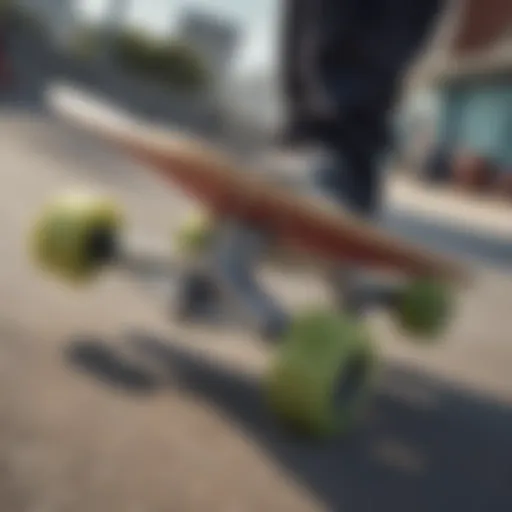
Wheels and bearings are the unsung heroes of a skateboard. Their quality can drastically change the way your board rolls across various surfaces. Softer wheels might be your best bet if you are mostly on rough terrains, offering a smoother ride and better grip. Conversely, harder wheels excel on smooth surfaces, granting speed and slide capability.
The bearings, which are found inside the wheels, greatly affect how smoothly they spin. Excellent bearings will provide little resistance, allowing for greater speed. A popular choice among skaters is ABEC-rated bearings, which signify quality and performance. However, keep in mind that too much speed can lead to a higher risk of slipping, especially for less experienced skaters.
Trucks and Stability
Trucks are the components that attach the wheels to the deck and are crucial for control. The type of truck affects how a skateboard performs; some are designed purely for stability while others offer a quicker response for tricks. Generally, wider trucks are ideal for stability during cruising but may not be the best choice for technical tricks.
One unique feature of trucks is their ability to pivot. This pivoting action allows the skater to carve turns smoothly and gain control over the board's movement. However, too much slack in trucks can lead to instability, which may not sit well with seasoned skaters who need precision in their maneuvers.
Choosing the Right Skate Shoes
Selecting the right skate shoes should not be a last-minute thought; this decision is fundamental to skateboarding performance. The right shoes significantly impact balance, support, and comfort, all of which evolve as the tricks become more intricate.
Performance Considerations
In the realm of skateboarding, performance considerations center around shoe construction and material. Well-cushioned shoes can absorb impact, especially during landings, reducing injury risk. Another aspect is the grip sole, made from durable rubber, offering skaters the much-needed friction to stick to their board even during high-speed tricks.
Choosing performance-oriented shoes enhances your skateboarding experience. However, a downside to more cushioned designs can be decreased board feel, limiting the capability to react quickly to changes in terrain.
Brand Impact: Converse
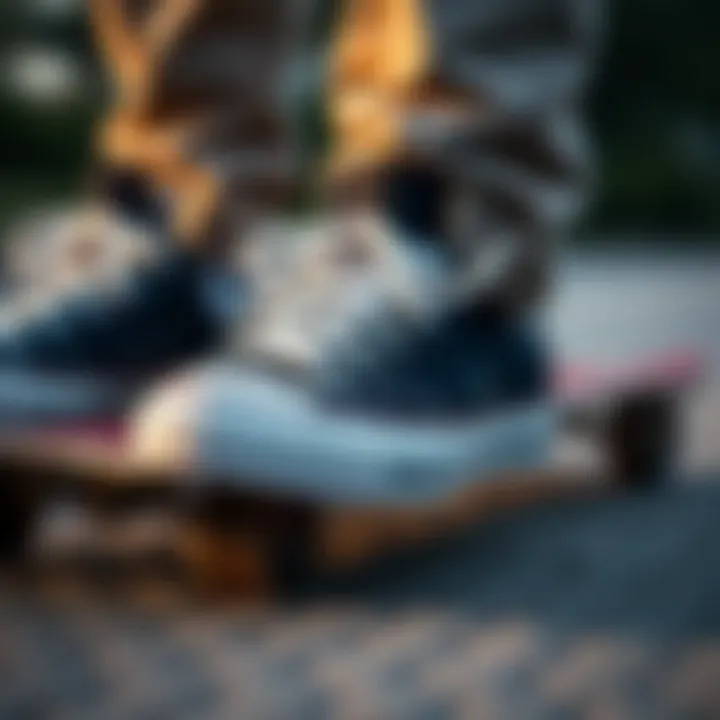
Converse has carved a niche in skate culture, offering styles that combine classic aesthetics with modern functionality. Their shoes often boast a sturdy canvas upper and a rubber sole that provides excellent grip for skating.
The brand’s popularity among skateboarders hinges upon its unique blend of style and resilience. These shoes customarily withstand the wear and tear of skating while making a statement on and off the board. Nonetheless, some skaters argue that while stylish, they might not provide the extensive cushioning other brands offer for skate performance.
Design and Functionality
The design and functionality of skate shoes are crucial for effective performance. A robust shoe should feature a fit snug enough to prevent the foot from sliding around while still allowing some freedom of movement. A feature many skaters look for is heel support, which aids in absorbing impacts from jumps or falls.
Popular designs often incorporate reinforced stitching to endure the rigors of skating. Yet, some designs can be overly flashy, drawing attention but sacrificing necessary elements for performance. Finding a balance between fashion and function is key in selecting the right pair.
"Choosing the right gear is like finding the perfect recipe: each ingredient plays a role in creating that ideal skate experience."
In summary, understanding gear goes beyond mere aesthetics in skateboarding; it directly relates to how effectively a skater can maneuver their board and express their style. Each part—from the deck to the shoes—has its significance, making informed choices crucial for anyone looking to achieve mastery in this dynamic sport.
Motion Mechanics in Skateboarding
Understanding motion mechanics in skateboarding is pivotal to grasping how skaters navigate their environment, execute tricks, and develop a personal style. The dynamic interactions between a skateboard, the rider, and the ground define every aspect of the sport. To truly appreciate the intricacies of skateboarding, one must delve into the physics that govern this exhilarating activity. The importance of balance, speed, and the ability to control turns and spins cannot be overstated, as they collectively contribute to a skater's performance and innovation.
The Physics of Skateboarding
In skateboarding, physics isn’t just a concept confined to textbooks; it’s alive with every push and turn.
Momentum and Speed
Momentum and speed are crucial to skateboarding. When a rider pushes off, they generate a force that propels the board forward, leading to increased speed. This speed isn’t just about being fast; it enables more complex tricks. The key characteristic here is that speed fuels both confidence and creativity on the board. Knowing that you can reach a desired momentum allows skaters to take calculated risks in their performances.
However, speed also comes with its drawbacks. Too much speed without control can lead to wipeouts and injuries, especially while attempting tricks. Skaters need to find that sweet spot where they have enough momentum to perform yet enough control to land safely. This balance presents a constant challenge, which ultimately adds to the thrill of skateboarding.
Gravity and Balance
Gravity is a constant presence in skateboarding, influencing how skaters maneuver on ramps and other surfaces. Understanding gravity is vital for maintaining balance, which is essential for good form during rides and tricks. The rider’s center of gravity shifts with every movement, impacting their stability. A skater who masters balance can manipulate their movements more freely, enhancing their ability to execute a variety of tricks comfortably.
However, balancing on a skateboard is like walking a tightrope; one moment of inattention can result in a fall. The unique feature of gravity and balance is that it teaches riders to adapt quickly, honing their skills with each session. This learning process is what keeps many skaters coming back to the parks for more.
Turning and Control
Turning and control highlight the relationship between a skater and their board. This dynamic is fundamental, enabling skaters to navigate through obstacles and carve out their path in parks and streets. The technique of leaning into turns while shifting the weight onto the trucks is essential; thus, control becomes second nature with practice.
Beyond basic maneuverability, effective turning opens doors to a range of tricks and styles within skateboarding. Riders often express their personality through how they approach turns and transitions. Despite the advantages, precision in turning can be challenging. A misjudged lean or pressure can send a skater sprawling, making control an ever-present focus during every ride.
Tricks and Techniques

Skateboarding isn’t just about getting from point A to point B; it’s about expressing oneself through tricks and style.
Ollies and Kickflips
Ollies and kickflips are foundational tricks that have become synonymous with skateboarding. An ollie serves as a jumping mechanism that allows skaters to lift their board into the air, clearing obstacles and setting up for further tricks. Its simplicity is deceptive, as mastering it is no small feat. The key characteristic of an ollie lies in its role as the building block for more advanced tricks.
A kickflip builds off the ollie, introducing a flip motion that adds flair. Both tricks are popular as they lay the groundwork for a vast repertoire of skills. However, the unique feature of these tricks is the personal style they convey; each skater adds their spin, making it distinctly theirs. Yet, they require immense practice and dedication, making for a tough learning curve, especially for beginners.
Grinds and Slides
Grinds and slides represent the raw essence of skateboarding style. As a skater, the ability to grind or slide on rails and ledges showcases creativity and technique. Grinds involve sliding on the trucks, while slides often engage the deck in contact with the surface. Both tricks highlight a skater's control and adaptability.
These techniques are beneficial for building transition skills and increasing confidence in performing tricks. The excitement of sliding across a rail often gives a newfound rush; however, they do require proper equipment and understanding of surface types, as not all setups are forgiving.
Jumps and Landing Strategies
Jumps are an integral part of skateboarding tricks; they take the excitement of the sport to another level. Understanding how to jump effectively is crucial for performing tricks and landing securely. The key characteristic of jumps is timing and planning. A skater must anticipate their landing upon takeoff, balancing height and distance intelligently.
Different landing strategies, such as landing with bent knees or using the board's natural flex, can cushion landing impacts. However, the unique challenge here revolves around miscalculations leading to crashes. Getting it wrong can lead to falls or injuries, which makes proper technique all the more essential.
The rhythm of motion, physics, and style is what makes skateboarding not just a sport, but an art form.
Skateboarding involves intricate motion mechanics guiding the journey through the culture, and the gear we choose enhances this experience. As skaters, understanding the foundational elements of motion can shape one's skills, leading to not just better performance, but growth as part of a vibrant community.
The Influence of Converse in Skateboarding
Converse has managed to carve out a niche for itself in the skateboarding world, perceived not just as a footwear brand but as a cultural artifact. Their shoes echo the history and evolution of skateboarding, making them an integral part of the narrative surrounding the sport. The brand symbolizes more than just gear; it embodies a lifestyle and a set of attitudes that resonate deeply with skateboarders.
Brand Legacy and Its Impact
Historical Significance
Converse's journey in skateboarding traces back to the 1970s, a period when skate culture was burgeoning. The brand initially made its mark with basketball shoes, particularly the Chuck Taylor All-Stars. These shoes, with their minimalist aesthetic and durable materials, became a staple for skaters who valued functionality and style.
Over the years, Converse has established itself as a brand that understands the skater's experience. Its historical significance cannot be overstated, as it has accompanied the growth of skateboarding from underground rebellion to mainstream sport. This legacy fosters a sense of belonging among skaters, making Converse a household name in skateboarding circles. It's a choice that speaks volumes about authenticity, as the shoes have stood the test of time, adapting while maintaining their core appeal.
Iconic Collaborations
Another facet of Converse’s influence lies in its collaborations. Think about the partnerships with professional skaters like Tony Hawks or collaborations with artists creating skate shoe designs. These efforts not only broadened the design palette but also deepened the connection to the skate community. The sheer variety in designs, paired with the credibility gained through these collaborations, makes the shoes desirable. They feel like curated artifacts of skater identity.
These collaborations emphasize the brand's adaptability and commitment to innovation. When a skater puts on a pair of Converse designed in collaboration with someone they respect, it’s like wearing a piece of skating history. Whether casual or actively involved in skate culture, the buyer knows they are partaking in something that transcends mere footwear.
Cultural Relevance
Cultural relevance is perhaps the most critical aspect influencing Converse’s place in skateboarding. The imagery associated with Converse—rebellious youth, artistry, and community—aligns seamlessly with skateboarding culture. When people see a skater in Chuck Taylors, there’s an instant association with freedom and creativity.
Wearing Converse isn’t just about comfort or aesthetic; it makes a statement. It tells the world that you appreciate the roots of the sport. Especially now, with visible strides towards inclusivity and diversity within the skating community, Converse’s deep-seated cultural ties serve as a means for skaters to express individuality through shared identity. The shoes are more than an accessory; they are part of a richer tapestry of self-expression.
Innovative Design Elements
Moving from legacy to technical aspects, Converse has consistently pushed the envelope in shoe design. Understanding the rigorous demands of skateboarding, they have implemented features that set their products apart.
Material Quality
The fabric choices in Converse skate shoes reflect considerations crucial to performance. Made often from durable canvas or suede, these materials provide a reliable combination of durability and flexibility. This quality continues to be an asset, allowing skaters to perform without worrying about premature wear and tear. Skaters appreciate products that can take a beating, and Converse’s commitment to high-quality materials is a clear advantage.
The only downside might be that while these materials are robust, they might not have the same level of water resistance as other brands. So, skaters in wet conditions have to consider this, making sure their kicks are appropriate for the weather.
Sole Technology
Sole technology has dramatically evolved in the Converse lineup. They incorporate innovative rubber compounds which offer superior grip on boards, affording better trick execution. This traction is crucial for maneuvering during complex skateboarding tricks and routines.
With advancements in cushioning systems, like the Nike Zoom Air, these shoes don’t just provide better shock absorption but also enhance overall comfort. However, the increase in features can sometimes change the shoe’s original fit, and some purists may prefer the classic feel of older models over newer innovations.
Customization Options
Customization in Converse shoes is another highlight. Many skaters relish personalizing their kicks to express their style. From colors to patterns, customizable elements allow individuality to shine through. This personal touch provides an emotional connection between the skater and their gear, making the shoes feel like an extension of themselves.
Nonetheless, while customization is flashy, it can occasionally lead to delays in production times. Not everyone can wait weeks for a unique pair tailored to their specifics. Skaters might have to weigh their need for uniqueness against waiting times.
"Converse shoes embody a legacy that intertwines the past and present of skate culture, forming a key link within the community."

In summary, the influence of Converse in skateboarding is multifaceted. With their rich history, deep-rooted cultural significance, and commitment to innovation, they’ve secured their role as not just footwear but as vital components of skateboarding's identity.
Exploring the Lifestyle of Skateboarders
Skateboarding is more than a sport; it’s an intricate lifestyle that embodies attitudes, identity, and community. As we delve into this subculture, we uncover how these elements are not merely accessories to the sport but rather its very foundation. Understanding the lifestyle of skateboarders provides insight into their motivations, values, and the social dynamics that shape their daily interactions.
Attitudes and Identity in Skateboarding
The heart of skateboarding lies in the unique attitudes that skaters cultivate. Many skateboarders embrace a philosophy of freedom; they often see skateboarding as an expression of individuality. The act of skating is a declaration, often communicating rebellion against societal norms. With their boards, skaters navigate urban landscapes, turning public spaces into personal canvases.
Skaters typically take pride in their identity, which is marked by a blend of persistence and creativity. The culture celebrates not just the magnificent tricks but also the journey of learning, falling, and doing it all over again. This relentless pursuit of improvement nurtures a resilient spirit, fortifying both the mind and body. Beyond performance, the identity of a skater encompasses style – from choice of attire to the graphics on the skateboard. This craftsmanship serves as a badge of honor, telling stories of experiences and adventures out on the streets.
The Role of Community and Social Networks
The essence of skateboarding is intrinsically linked to community. It thrives in local skate parks and social networks where skaters bond over their shared passions.
Local Parks and Scene
Local parks are pivotal in shaping the skateboarding community. They serve as a sanctuary where enthusiasts gather, hone their skills, and build friendships. The key characteristic of these parks is their openness; they invite everyone, regardless of skill level, to participate.
A unique feature of skate parks is their diverse terrain, which can cater to various styles and tricks. This sets the stage for both seasoned pros and newcomers, allowing them to engage in a dynamic interaction that is beneficial for growth. However, skate parks are sometimes confined to specific times or regions, which could limit participation. Despite challenges, the welcoming ambiance of local parks cultivates a sense of belonging among skaters.
Online Forums and Discussions
In the digital age, online forums have gained significance in skateboarding culture. Many skaters turn to platforms like Reddit or dedicated skateboarding forums to share experiences, discuss techniques, or even critique gear. This characteristic of online forums is that they transcend geographical barriers, fostering global conversations.
Discussions in these forums expose skaters to trends, insights, and innovations that might not be available locally. They also provide a platform where skaters can seek advice or mentorship from seasoned individuals, which is crucial for learning and growth. The downside, however, is that sometimes the anonymity can lead to negativity or trolls, which can dampen the community spirit. Still, the benefits of connection and exchange far outweigh the drawbacks.
Skateboarding Events and Gatherings
Skateboarding events and gatherings play a crucial role in solidifying the culture. These occasions bring together skaters from diverse backgrounds, whether at competitions, demos, or informal meet-ups. The key characteristic of such events is their celebratory nature; they highlight the artistry and athleticism of skateboarding.
These gatherings are not just about showcasing skills; they foster camaraderie and inspire the next generation. For newcomers, seeing experienced skaters perform can spark motivation and creativity. Yet, the competitive aspect can sometimes feel intimidating. However, many gatherings also include workshops or beginner lines, ensuring that everyone has the chance to participate and learn.
Through understanding these elements of lifestyle, we get a clearer picture of what skateboarding truly represents. It’s a tightly-knit community fueled by passion, persistence, and an unwavering commitment to individual expression.
The Future of Skateboarding Gear and Technology
As we delve into the realm of skateboarding gear, an essential aspect to consider is the future—how evolving technology and innovative designs are reshaping the skateboarding experience. These advancements are crucial not solely for performance enhancement but also for fostering a culture that embraces sustainability, fashion, and functionality. The fusion of these elements illustrates how important it is to stay ahead in a sport that continuously adapts and thrives on creativity and expression.
Advancements in Skateboard Design
Skateboard design has not stayed stagnant. Over the years, with inputs from enthusiasts and professionals alike, there’s been a noticeable shift toward more tailored and performance-driven decks. You’ll see brands experimenting with new shapes and materials to enhance durability and flexibility. Lightweight yet robust materials such as carbon fiber are becoming popular because they bring about a better strength-to-weight ratio. Moreover, decks nowadays often come with features like kicktails that assist in performing complex tricks more seamlessly. In essence, these advancements reflect a greater understanding of how subtle changes can lead to significant improvements in the skateboarder's performance.
Emerging Trends in Skate Shoes
Sustainable Materials
Sustainable materials are picking up steam in the world of skate shoes. Manufacturers are increasingly turning to eco-friendly choices like recycled plastics and organic cotton. This shift represents a larger trend within industries to reduce carbon footprints and promote environmental responsibility. Today’s conscious consumer appreciates brands that align with ethical practices, which solidifies the case for using sustainable materials in skate footwear. These shoes don’t just contribute to planet-saving efforts; they often come with unique aesthetics that appeal to the skater culture—standing out on and off the board. However, the challenge remains in balancing sustainability with performance; while some eco-friendly options excel, others may not withstand the rigors of daily skating.
Smart Technology Integration
The rise of wearable technology is entering the skateboard scene, with smart features like Bluetooth connectivity and performance tracking becoming the norm rather than a novelty. Imagine shoes that measure your jumps and grants data through an app on your phone—these are no longer figments of imagination. This technology allows skaters to not only refine their skills but also build communities by sharing performance stats with friends. Unlike traditional footwear, smart skate shoes provide real-time data that can guide user improvement. Still, questions regarding battery life and durability must be considered, as skaters often put their gear through its paces.
Fashion Meets Function
In skateboarding, looking good is just as important as performing good. The intersection of fashion and function has never been more pronounced, with brands launching lines that boast both style and stability. Shoes today feature sleek designs while integrating grip technology, ensuring top performance during all kinds of tricks. Highlighting aesthetics with bold colors and designs also attracts a broader audience. The challenge lies in ensuring that the fashionable elements don’t compromise the functional aspects of the footwear, and many brands are rising to the occasion. As such, skaters are not just buying a product; they’re investing in a statement that reflects their identity.
"Tomorrow's skateboarding gear is not just about performance—it's about lifestyle, sustainability, and integrating technology into every ride."
Culmination: The Interplay of Gear and Motion
In the world of skateboarding, the relationship between gear and motion is not just pivotal; it is the very backbone of the sport. This interplay goes beyond mere mechanics—it defines how skaters express themselves and navigate their environment. Understanding this relationship can elevate a skater’s experience, allowing them to perform at their best while embodying their unique style.
When one considers equipment like a skateboard's deck, wheels, and trucks, it becomes evident how these components contribute to the dynamics of motion. A lighter deck can increase agility, while wider trucks may offer greater stability. Likewise, skate shoes play a significant role; specific designs enhance grip, allowing skaters to perform tricks with confidence. These elements synthesise together, affecting how riders engage with elements like ramps and rails.
Summary of Key Points
- The gear involved in skateboarding significantly influences performance and style. From the deck's material to the shoe's grip, each part plays a role in how skaters move and express themselves.
- The physics of motion, particularly concepts like momentum and balance, are essential in executing tricks effectively. Understanding these can lead to mastery over skills.
- Converse's longstanding association with skateboarding symbolizes more than just footwear; it embodies a culture that prioritizes authenticity in both performance and aesthetics.
- Recognizing the importance of community and social networks can enhance a skater's connection to the sport. Local parks or online discussion forums can become testbeds for new ideas and skills, influencing both individual and collective progress.
Reflections on Skateboarding Culture
The culture surrounding skateboarding is a vibrant tapestry woven from the threads of community, history, and individual expression. Unlike mere competition, skateboarding thrives on shared experiences, where each trick perfectly executed becomes a celebration of skill and creativity.
Cities across the globe echo with the sound of wheels on pavement, reflecting a movement that respects tradition while looking forward to new trends. Skaters often approach the sport with a rebellious spirit, pushing boundaries—both in their techniques and their choice of gear. Converse shoes, in particular, have become iconic allies for skateboarders, merging fashion with function, which speaks volumes about how personal identity is shaped in this culture.
Moreover, the dialogue about sustainability in gear is growing. As companies become more aware of their environmental impact, initiatives for creating eco-friendly skate products emerge, giving rise to a new dimension in skate culture—one that aligns performance with responsibility.